| 'US not living up to Obama message' Barbara Ferguson | Arab News |
WASHINGTON: The chairman of the Joint Chiefs of Staff said that no amount of public relations will establish credibility if American behavior overseas is perceived as arrogant, uncaring or insulting, referring to the government efforts at "strategic communication" with the Muslim world. The critique by the chairman, Adm. Mike Mullen, was published Friday by Joint Force Quarterly, an official military journal, and comes as the United States is widely believed to be losing credibility on the war of ideas against extremist Islamist ideology. "To put it simply, we need to worry a lot less about how to communicate our actions and much more about what our actions communicate," Adm. Mullen wrote in the critique. The critique is particularly relevant as the Obama administration has made a deliberate effort to counter militant propaganda, part of its broader strategy to defeat the Taleban and Al-Qaeda in Afghanistan and Pakistan. "I would argue that most strategic communication problems are not communication problems at all," he wrote. "They are policy and execution problems. Each time we fail to live up to our values or don't follow up on a promise, we look more and more like the arrogant Americans the enemy claims we are." "It's not about telling our story," he stated. "We must also be better listeners." While President Obama has made an effort to differentiate himself and his administration from his predecessor, George W. Bush, in the eyes of the Muslim world - including through a widely praised speech in Egypt on June 4 - the perception of America as an arrogant oppressor has not changed noticeably, particularly in Iraq and Afghanistan, where United States forces remain engaged in war, and in Pakistan, where American-launched missiles aimed at militants from the Taleban and Al-Qaeda have killed civilians. Adm. Mullen's sharp remarks have caused a stir within the ranks of the military. One Marine officer currently based in Iraq, on his fourth deployment, responded to the remarks with glee: "This is why he is the chairman!" he said in an email to this reporter. Many currently working in the region say that despite the Obama Administration's best efforts - the perception of America as an arrogant oppressor has not changed noticeably, particularly in Iraq and Afghanistan, where United States forces remain engaged in war, and in Pakistan, where American-launched missiles aimed at militants from the Taleban and Al-Qaeda have killed civilians. Last week, during a visit to Pakistan by Richard Holbrooke, Obama's special envoy, Pakistanis told his entourage that America was widely despised in their country because, they said, it was obsessed with finding and killing Osama Bin Laden to avenge the Sept. 11, 2001, attacks. Adm. Mullen also expressed concern over a trend to create entirely new government and military organizations to manage a broad public relations effort to counter anti-Americanism, which he said had allowed strategic communication to become a series of bureaucracies rather than a way to combat extremist ideology. He also challenged a popular perception that Al-Qaeda operates from primitive hide-outs and still wins the propaganda war against the United States. "The problem isn't that we are bad at communicating or being outdone by men in caves," Adm. Mullen wrote. "Most of them aren't even in caves. The Taleban and Al-Qaeda live largely among the people. They intimidate and control and communicate from within, not from the sidelines." American messages to counter extremist information campaigns "lack credibility, because we haven't invested enough in building trust and relationships, and we haven't always delivered on promises," he wrote. Referring to past US successes on the ground, Adm. Mullen cited American efforts at rebuilding Europe after World War II and then containing communism as examples of successes that did not depend on opinion polls or strategic communication plans. He cited more recent military relief missions after natural disasters as continuing that style of successful American efforts overseas. "That's the essence of good communication: having the right intent up front and letting our actions speak for themselves," Adm. Mullen wrote. "We shouldn't care if people don't like us. That isn't the goal. The goal is credibility. And we earn that over time." "Only through a shared appreciation of the people's culture, needs and hopes for the future can we hope ourselves to supplant the extremist narrative." He acknowledged that the term strategic communication was probably here to stay, but argued that it should be limited to describing the process by which we integrate and coordinate government communications programs. Adm. Mullen did not single out specific government communications programs for criticism, but wrote that "there has been a certain arrogance to our 'strat comm' efforts." He wrote that good communications run both ways. It's not about telling our story, he stated. "We must also be better listeners. The Muslim community is a subtle world we don't fully and don't always attempt to understand," he wrote. Coinciding with the publication of his essay, Adm. Mullen released a YouTube video inviting questions from members of the armed services and the public on a range of national security and military personnel issues for an online discussion. "The chairman intends to use social media to expand the two-way conversation with service members and the public," said a statement announcing the interactive video question-and-answer session. |
Saturday, August 29, 2009
US not living up to Obama message'


Thursday, August 27, 2009
French Hostage Freed in Somalia
| French Hostage Freed in Somalia | |
| ..VOA Nairobi 26 August 2009 |
 |
In initial reports, senior Somali military and police officials said a foreigner approached government soldiers near the Villa Somalia presidential palace in Mogadishu early Wednesday, identifying himself as one of the French men abducted by gunmen at the Sahafi Hotel last month.
The reports said the man was taken to the Villa Somalia, where he told government officials that he had escaped after killing three of his captors.
But in an interview with VOA's Somali Service, the former hostage, Marc Obriere, said he made his escape without violence when his captors were asleep.
"I did not hurt anybody. They make a mistake with my door. And after, I ran away through Mogadishu to a safe place," he said.
Obriere said that he was in good health and was treated fairly during his captivity.
Sources in Mogadishu tell VOA that there are reports that some members of a hard-line Islamist insurgent group called Hisbul Islam arranged for the release of Obriere in exchange for a ransom. A Hisbul Islam spokesman, Mohamed Osman Aruus, denied that anyone in his group had received a ransom. Separately, a French foreign ministry official told reporters in Paris the agent had escaped on his own, without incident, and that no ransom had been paid.
The fate of the second French hostage, who was being held by al-Shabab, an al-Qaida-linked militant group allied with Hisbul Islam, is not immediately clear. But residents in Mogadishu say al-Shabab fighters have been searching vehicles Wednesday at various checkpoints set up in areas under their control. That has led to speculation that the second hostage may also have escaped or has been set free without authorization.
 |
| Mogadishu's hotel Sahafi, where two French military advisors were kidnapped 14 Jul 2009 |
One group of militants, Hisbul Islam, is said to have held both hostages briefly before handing Obriere's colleague to al-Shabab. Unconfirmed reports said the hostages were held in two different locations to discourage a rescue attempt.
In recent years, Somalia has seen a surge in ship hijackings that has netted pirates millions of dollars in ransom. On land, gunmen have carried out scores of kidnappings-for-ransom, targeting mostly journalists and aid workers. At least eight foreigners remain in captivity.
Bukhari :: Book 3 :: Volume 31 :: Hadith 115..ON FASTING
Bukhari :: Book 3 :: Volume 31 :: Hadith 115
Narrated Talha bin 'Ubaid-Ullah:
A bedouin with unkempt hair came to Allah's Apostle and said, "O Allah's Apostle! Inform me what Allah has made compulsory for me as regards the prayers." He replied: "You have to offer perfectly the five compulsory prayers in a day and night (24 hours), unless you want to pray Nawafil." The bedouin further asked, "Inform me what Allah has made compulsory for me as regards fasting." He replied, "You have to fast during the whole month of Ramadan, unless you want to fast more as Nawafil." The bedouin further asked, "Tell me how much Zakat Allah has enjoined on me." Thus, Allah's Apostle informed him about all the rules (i.e. fundamentals) of Islam. The bedouin then said, "By Him Who has honored you, I will neither perform any Nawafil nor will I decrease what Allah has enjoined on me. Allah's Apostle said, "If he is saying the truth, he will succeed (or he will be granted Paradise)."
Saturday, August 22, 2009
Ramadaan Mubaarak 2009
One of the main objectives of Islam is to emancipate the mind from superstitions, the soul from sin and corruption, the conscience from oppression and fear, and the body from disorder and degeneration. All these are clearly found in fasting. Fasting teaches us sincerity, by obeying Allah without anyone overseeing it. There is no authority that can truly compel us to fasting. No witness can confirm our fasting in certainty. It is sometimes called the secret pillar of Islam. It is secret between the believer and Allah.
It teaches us patience and usefulness. It makes us understand the pain of poverty and empty stomach, a state of livelihood by millions of Muslim brothers worldwide.
Leaving more attributes of fasting to the today's article about ways and manners of fasting, under the heading The Etiquette of fasting, let me pray Allah to guide us to the right path and may Allah make us those who uphold Ramadan in its virtue. Ameen
I leave you with the following article on fasting, copied from www.islamweb.net without any change in form and shape.
By Ahmed Arwo
Eating Suhoor (the pre-dawn meal):
It is recommended to eat a pre-dawn meal and there is no sin upon one who does not do so. Anas, may Allaah be pleased with him, reported that the Messenger of Allaah, sallallaahu alayhi wa sallam, said: "Eat a pre-dawn meal, for there are blessings in it." [Al-Bukhaari and Muslim]
The reason is that it strengthens the fasting person, makes him more energetic, and makes fasting easier for him.
The minimum amount to eat in the pre-dawn meal:
Eating a small or large quantity of food, or even by drinking just a sip of water suffices the person and he is considered to have adhered to the Prophetic recommendation. Abu Sa'eed Al-Khudri, may Allaah be pleased with him, reported that the Prophet, sallallaahu alayhi wa sallam, said: "The pre-dawn meal is blessed, so do not neglect it even if you only take a sip of water. Verily, Allaah and the angels pray for those who have the pre-dawn meals." [Ahmad]
The time for the pre-dawn meal:
The time for the pre-dawn meal is between the middle of the night and dawn. It is considered best to delay it (that is, as close to dawn as possible). Zayd Ibn Thaabit, may Allaah be pleased with him, reported: "We ate the pre-dawn meal with the Messenger of Allaah, sallallaahu alayhi wa sallam, and then we got up for the prayer. He, may Allaah be pleased with him, was asked: 'What was the amount of time between the two?' He may Allaah be pleased with him responded: 'The time it would take to recite fifty verses.'" [Al-Bukhaari and Muslim]
Doubt concerning the time of Fajr (dawn):
If one is in doubt whether or not the time of Fajr has begun, he may continue to eat and drink until he is certain that it is Fajr. He should not base his action on doubt or suspicion. Allaah has made the signs for beginning the fast very clear and unambiguous. Allaah Says (what means): "…Eat and drink until the white thread of the dawn becomes distinct from the black thread [of the night]..." [Quran 2:187]
A man said to Ibn 'Abbaas, may Allaah be pleased with him: "I eat until I suspect that its time (i.e. Suhoor) has ended so I stop." Ibn 'Abbaas, may Allaah be pleased with him, observed: "Continue to eat until you are certain about the time." Abu Daawood, may Allaah have mercy upon him, reported that Ahmad Ibn Hanbal, may Allaah have mercy upon him, said: "If you are not sure whether or not it is time for Fajr, then eat until you are sure dawn has come."
Hastening in breaking the fast:
It is preferred for the fasting person to hasten in breaking the fast when the sun has set. Sahl Ibn Sa'd, may Allaah be pleased with him, reported that the Prophet, sallallaahu alayhi wa sallam, said: "People will continue to be upon virtue so long as they hasten in breaking the fast." [Al-Bukhaari and Muslim]
It is recommended to break the fast by eating an odd number of dates or, if that is not available, then by drinking some water. Anas, may Allaah be pleased with him, reported: "The Messenger of Allaah, sallallaahu alayhi wa sallam, would break his fast with ripe dates before he would pray. If those were not available, he, sallallaahu alayhi wa sallam, would eat dried dates. If those were not available, he would drink some water." [Abu Daawood, Al-Haakim and At-Tirmithi]
Sulaymaan Ibn 'Amr, may Allaah be pleased with him, reported that the Prophet, sallallaahu alayhi wa sallam, said: "If one of you is fasting, let him break his fast with dates. If dates are not available, then with water, for water is purifying." [Ahmad and At-Tirmithi]
The preceding narration also shows that it is preferred to break the fast in the above manner before praying. After the prayer, the person may continue to eat, but if the evening meal is ready, one may begin with that. Anas, may Allaah be pleased with him, reported that the Messenger of Allaah, sallallaahu alayhi wa sallam, said: "If the food is already presented, eat before praying the sunset prayer and do not eat your meals in haste." [Al-Bukhaari and Muslim]
Supplications while breaking the fast and while fasting:
It is confirmed that the Prophet, sallallaahu alayhi wa sallam, would say upon breaking his fast: "The thirst has gone, the glands are wet and, Allaah willing, the reward is confirmed." [Abu Daawood]
The Prophet, sallallaahu alayhi wa sallam, also said: "Three people will not have their supplications rejected: a fasting person until he breaks his fast, a just ruler, and an oppressed person." [At-Tirmithi]
Refraining from performing any actions that do not befit fasting:
Fasting is an act of worship that draws one closer to Allaah. Allaah has prescribed it to purify the soul and to train it in good deeds. The fasting person must be on guard against any act that may cause him to lose the benefits of his fast. Thus, his fast will increase his Allaah-consciousness, as Allaah Says (what means): "O you who believe! Fasting is prescribed for you as it was prescribed for those before you that you may attain God-consciousness." [Quran 2:183]
This entails that fasting is not just refraining from eating and drinking, but it is also refraining from everything else that Allaah has forbidden. Abu Hurayrah, may Allaah be pleased with him, reported that the Prophet, sallallaahu alayhi wa sallam, said: "Fasting is not abstaining from eating and drinking only, but also from vain speech and foul language. If one of you is being cursed or annoyed, he should say: "I am fasting, I am fasting." [Ibn Khuzaymah, Ibn Hibbaan and Al-Haakim]
To stress the importance of having one's fast reflecting on his actions, the Prophet, sallallaahu alayhi wa sallam, said: " Allaah does not need the fast of one who does not abandon false speech or acting according to his false speech." [Al-Bukhaari]
Abu Hurayrah, may Allaah be pleased with him, narrated that the Prophet, sallallaahu alayhi wa sallam, said: "Perhaps a fasting person will get nothing from his fast save hunger, and perhaps the one who stands to pray at night will get nothing from his standing except sleeplessness." [An-Nasaa'i, Ibn Maajah, and Al-Haakim]
Using Miswaak (a tooth stick) or a brush:
It is preferred for the fasting person to use a tooth stick or a brush. There is no difference if he uses it at the beginning or the ending of the day. It is confirmed that the Prophet, sallallaahu alayhi wa sallam, used tooth stick [Miswaak] while fasting.
Being generous and studying the Quran:
Being generous and studying the Quran is recommended during any time, but it is especially stressed during the month of Ramadhaan. Al-Bukhaari may Allaah have mercy upon him recorded that Ibn 'Abbaas, may Allaah be pleased with him, said: "The Prophet, sallallaahu alayhi wa sallam, was the most generous of people, but he would be most generous during Ramadhaan when he would meet with Jibreel [the angel Gabriel]. He would meet with him every night and recite the Quran. When Jibreel met him, he, sallallaahu alayhi wa sallam, would be faster in spending charity than a fast wind."
Striving to perform as many acts of worship as possible during the last ten days of Ramadhaan:
Al-Bukhaari and Muslim may Allaah have mercy upon them recorded from 'Aa'ishah, may Allaah be pleased with her, that during the last ten days of Ramadhaan, the Messenger of Allaah, sallallaahu alayhi wa sallam, would awaken his wives during the night and then remain apart from them (refrain from sexual relations with his wives and concentrate on worship). A version in Muslim reads: "He, sallallaahu alayhi wa sallam, would strive [to do acts of worship] during the last ten days of Ramadhaan more than he would at any other time.
Season of spirituality and charity
| Season of spirituality and charity Rahmah Ismail Nawwab | Arab News |
Is Ramadan a month when people eat lavishly, become soap opera addicts, and shop and stay up till the wee hours of the night? Or is that impression in stark contrast to the spirit of Ramadan? The scriptural basis of the command to fast in Ramadan came in a revelation to the Prophet Muhammad (peace be upon him) in 624 C.E., in the second year of the Hijrah, that is, some 12 years after the Prophet received the first divine call at the Cave of Hira, on what later came to be aptly known as Jabal Al-Nur, "The Mountain of Light." That first revelation was on one of the last nights of the month of Ramadan called "The Night of Power." This nocturnal event, which took place in the environs of the holy city of Makkah in 610 C.E. was a turning point in the history of Arabia and the world. Since the fasting of Ramadan was ordained some 14 centuries ago, billions of Muslim men and women have, despite the physical rigors and temptations the believers face, faithfully followed the fast as prescribed in that revelation: "O believers! Fasting is prescribed for you as it was prescribed for those before you, that you might be conscious of God.... Ramadan is the month in which the Qur'an was revealed as guidance to humankind, and as a clear evidence of that guidance, and as the standard for distinguishing between right and wrong. So whoever of you is present during that month should fast...." (The Qur'an, Surat Al-Baqarah, 2:183 and 185). Ramadan is a month in which Muslims attempt to breathe the air of piety and tranquility. They are constantly engaged in worship, individually and congregationally, in recitation of the Qur'an from cover to cover, and in charitable deeds. The spiritual aspect of the month is further highlighted by the night-time congregational prayers, tarawih. The almsgiving reflects the community's sharing of their God-given bounty with those who are less fortunate. It is a time when a Muslim's life is suffused with peace, contemplation, self-abnegation and giving. Fasting is one of the five pillars of Islam — compulsory for every adult Muslim man and woman who is mentally and physically fit and is not on a journey. Those unable to fast during Ramadan for excusable reasons, such as temporary illness, travel, pregnancy or nursing children, are obligated by the Qur'an to do so later in the year. Those permanently unable to fast, due to health reasons or old age, are required to pay alms to make up the days they miss. Out of respect, Muslims who are exempted from fasting for such reasons refrain from eating, drinking and smoking in front of those who fast. During Ramadan, hundreds of millions of Muslims around the world rise to its moral and physical challenges by abstaining not only from eating, drinking, smoking and other carnal pleasures, but also from getting angry, swearing and gossiping. The fasting period starts just before daybreak and ends at sunset. The discipline imposed by Ramadan can serve to break unhealthy habits. Fasting motivates smokers to quit, and caffeine addicts, like me, to realize they can live without coffee. Those who have an unbreakable tie with anything that has a sprinkle of sugar on it will wait patiently until they can enjoy luqaymat, sweet dumplings, or other delicacies that are popular in Ramadan. Nevertheless, Ramadan has the character of a festival: A substantial meal, iftar, "breakfast," served at sunset to mark the end of the daylong fast. It is common to see a family immersed in preparing the iftar meal with the aromatic wafts of delicious fare and the sounds of clattering cutlery. Muslims appreciate the feeling of togetherness at the iftar, which is shared by families and friends. Mosque courtyards are another place where the young and old, rich and poor, gather to break their fast. Iftar is not intended to shock the stomach with abundant amounts of food. Instead, when the sunset call to prayer is heard, many break their fast with a few sips of water, or Zamzam water from the sacred well in the Grand Mosque at Makkah. For many families, dates are indispensable at the time of breaking the fast as they were eaten at the same time in the days of the Prophet. The dates and water are followed by the main meal, a tempting array of Ramadan specialties. Another meal, sahoor, is taken before the start of one's fast just before dawn breaks. The Prophet himself recommended partaking of that meal. As in everything else, long-established practices at times show signs of societal stress. For instance, though Ramadan requires both a strict physical discipline and a high moral consciousness, some people have been tempted by the powerful allure of the contemporary materialistic world. This has led to a dichotomy: such people fast but forget the real goal of fasting. Thinking people, in Saudi Arabia and elsewhere, question such negative developments, which challenge the divine purpose of this institution: to strive to come closer to God and to be more charitable to His creatures during this holy month. Among others, Labor Minister Ghazi Al-Gosaibi, a well-known writer and poet, has compared the fast as was observed in previous eras with that kept by modern-day Muslims. He felt nostalgic for the Ramadan of his younger days, which was permeated by a genuinely heightened sense of spirituality. Al-Gosaibi found fault with some of the present generation for losing sight of the quintessential, inner dimension of Ramadan. He said that some of those who observe the fast nowadays are sinking in the swamps of rampant contemporary commercialism, over-indulgence in food, the plethora of round-the-clock profane TV shows. Such crass materialism, Al-Gosaibi said, is at cross-purposes with the true spirit and objective of Ramadan, which is the purification of the soul and service of those in need round the globe. Many of his readers agreed with his razor-sharp criticism of this fairly recent trend. Youngsters, both girls and boys in the Gulf countries, count the days until the 15th night of Ramadan for a folk, purely social, event called Qarqa'an. They roam the streets wearing traditional costumes, singing lyrics celebrating the month and knocking on doors hoping to fill their bags with sweets or nuts. Eid Al-Fitr, the worldwide festival of breaking the fast, marks the end of the holy month. As a final act of charity, Muslims pay the mandated Zakat Al-Fitr to the needy to enable them to join in the Eid festivities. On the first day of Eid, families go for a celebratory prayer to the mosque wearing new clothes. Later, they visit relatives and friends, and they enjoy amusement parks where the children are the monarchs of all the rides and games. Ramadan is thus a month of trials of the flesh and triumphs of the spirit, of personal sacrifices and joyous experiences.
|
Friday, August 21, 2009
Understanding the myth of Israeli superiority
Understanding the myth of Israeli superiority
by
 Many people around the world look in awe towards Israel, a nation only 60 years old, built by a people who were persecuted for centuries and have one of the most advanced militaries in the world. Israel has managed, from its inception, according to many, to defeat its neighbouring nations in four wars, even though its population is that of a small island. Many Muslims across the world have adopted a number of conspiracies that place Israel at the helm of a Masonic plot to achieve world domination going back to the secretive meeting of the elders of Zion. It is such realities that have led to many believing it is Israel that pulls the strings around the world even controlling US foreign policy.
The close relationship between the US and Israel has been one of the most salient features in US foreign policy for nearly four decades. The $3 billion in military and economic aid sent annually to Israel by Washington is rarely questioned in Congress, even by liberals who normally challenge US aid to governments that engage in widespread violations of human rights, or by conservatives who usually oppose foreign aid in general. Virtually all Western countries share the United States' strong support for Israel's right to exist in peace and security. The US often stands alone with Israel at the United Nations and other international forums when objections are raised over ongoing Israeli violations of international law and related concerns.
The Politics of Israel
The US took an interest in the region after WW2 after tasting the benefits of Gulf oil and decided that it could no longer remain isolated and began manoeuvring in the area. In 1944 the State Department described the Arabian Peninsula as constituting "A stupendous source of strategic power and the greatest material prize in the world's history." The United States was aware that control of the region's oil supply was a lever to control the world. As George Kennan, the influential planner of the containment of the Soviet Union put it in 1949: "If the US controlled the oil, it would have veto power over the potential actions in the future of rivals like Germany and Japan."Realising the potential of the Middle East, the US set forward multiple plans and strategies to control the region.
The establishment of a Jewish homeland had been proposed by British Prime Minister Henry Bannerman in 1906: "There are people (the Muslims) who control spacious territories teeming with manifest and hidden resources. They dominate the intersections of world routes. Their lands were the cradles of human civilizations and religions. These people have one faith, one language, one history and the same aspirations. No natural barriers can isolate these people from one another ... if, per chance, this nation were to be unified into one state; it would then take the fate of the world into its hands and would separate Europe from the rest of the world. Taking these considerations seriously, a foreign body should be planted in the heart of this nation to prevent the convergence of its wings in such a way that it could exhaust its powers in never-ending wars. It could also serve as a springboard for the West to gain its coveted objects."
Israel was created on the basis of fulfilling a British interest by being placed in the middle of the Muslim world; however British weakness after WW2 led to the US to organise the region. The US looked towards Israel, within defined and secure boundaries, even though it was established with dreams of Eretz Israel (a greater Israel). This was the first difference between the US and Israel - the position of Israel is very clear since it has refused to define its borders from the very beginning, this exposed the fact that Israel was not a colony of the US and there were conflicting interests between the two.
Theodor Herzl is credited with founding political Zionism, a movement which sought to establish a Jewish state, by elevating the Jewish question onto the international scene. In 1896, Herzl published Der Judenstaat (The Jewish State), offering his vision of a future state; the following year he presided over the first World Zionist Congress. Ever since the establishment of the Zionist movement, the Jews have been aiming to achieve economic and political dominion over the Middle East.
The Myth of world domination
Although British influence in the Middle East has been replaced by American influence, the US is committed to protecting Israel, guaranteeing her security and securing a prosperous standard of living for the Jews living there. However this is not out of any moral obligation but due to strategic interests. It is these interests that have resulted in support of all types to Israel. With the population of the Palestinian territories forecasted to overtake that of Israel's by 2019, Israel needs a strong economy to attract Jewish migration from across the world and then to maintain a high standard of living for them.
A cursory glance at Israel's economy shows it is poor in natural resources; Israel depends on imports of oil, coal, food, production inputs and military equipment. Through a variety of agreements, deals and support from the West Israel has managed to develop the foundation of an industrial economy. With a population the size of Scotland Israel has an economy worth $185 billion. The European Union, US, Turkey, Mexico, Canada, Jordan and Egypt, have signed free trade agreements with Israel which means they all trade without any restrictions, which has helped Israel in procuring raw materials.
Foreign markets are critical for Israel. Due to having a very small domestic market (due to its small population) it is forced to search for foreign markets to generate wealth. Industrialised nations generally focus 10% of their economy towards foreign trade (imports and exports). However 30% of the Israeli economy relies on exports, which is very high. Israel's main exports 10 years ago were Jaffa oranges and other agricultural products. Today's exports are increasingly high-tech, an estimated 80% of the products Israel exports are high-tech and electronics components. However Israel is finding that it's light years behind Japan, China and Germany in this very competitive sector. 40% of Israeli exports end up on US shores even though the US can make the same agricultural goods and computer hardware cheaper and of better quality.
Because of the strategic role Israel plays in the Middle East it has been spoilt with military hardware and technology which would have otherwise taken it decades to develop. Israel is reliant upon foreign nations and people for its survival, without which is simply could not exist due to the geographical challenges it faces
The Middle East Peace Process
America rejects the idea of substituting European influence with Jewish influence, and she also rejects the idea of sharing power with any other country. America is committed to securing Israel, guaranteeing her security and ensuring a prosperous standard of living for the Jews living there. However, she refuses to allow Israel to share the influence with her.
In order to prevent Israeli expansion and the spread of Israeli influence in the region, American policy has been based on isolating Israel from the rest of the region in an attempt to curtail her and minimise her role in the quest to solve the Palestinian issue and the Middle Eastern issue. US policy is centred around establishing a Palestinian state to act as an instrument of containment; by establishing a host of international guarantees and by bringing multinational forces to be deployed along the borders between Israel and the neighbouring Arab countries - Jordan, Syria, Egypt and the future Palestinian State. The American policy has also been based on working towards the internationalisation of Jerusalem, as America sees this internationalisation as a solution to the sensitive crisis of Jerusalem that would please the Christians and guarantee a strong American presence through the presence of the United Nations.
There are a whole host of factors which has lead to US and Israeli foreign policy to reach the extent it has today:
- Many US citizens share a sentimental attachment with Israel especially many liberals - particularly among the post-war generation in leadership positions in government and the media. Many Americans identify with Israel's historical struggle, internal democracy, relatively high standard of living and its role as a sanctuary for an oppressed minority group that spent centuries in diaspora.
- The Christian Right in the US, with tens of millions of followers and a major base of support for the Republican Party, historically has thrown its immense media and political clout in support of Israel and other right-wing Israeli leaders. Based in part on a theology that sees the ingathering of Jews to the Holy Land as a precursor for the second coming of Christ, the battle between Israelis and Palestinians is, in their eyes, simply a continuation of the battle between the Israelites and the Philistines, with God having deemed that the land belongs to Israel alone.
- Mainstream and conservative Jewish organisations have mobilised considerable lobbying resources, financial contributions from the Jewish community, and citizen pressure on the news media and other forums of public discourse in support of the Israeli government. The role of the pro-Israel lobby is to create a climate in line with Israeli interests and helping in the creation of a climate of intimidation among those who seek to moderate US policy, including growing numbers of progressive Jews.
- The arms industry, contributes five times more money to congressional campaigns and lobbying efforts than AIPAC and other pro-Israel groups combined. The industry however does have a considerable stake in supporting massive arms shipments to Israel and other Middle Eastern allies of the United States. It is far easier for a member of Congress to challenge a $60 million arms deal to Indonesia, for example, than the $2 billion of arms to Israel, particularly when so many congressional districts include factories that produce such military hardware.
US-Israel relations
Israel has successfully managed to build a state and then mobilise its resources to achieve many of its long term aims. However without Western support it is impossible to see how Israel could reach the position it is in today. Israel has however failed in after more than 60 years in its ultimate aim of establishing a state with fixed borders encompassing the lands it was supposedly promised by God and this is due only to one reason - such an aim is not in the interests of the US.
The US plans defined Israeli borders alongside a Palestinian state. The Likud party which has been the party of power for most of Israel's recent history attempted to unilaterally define the borders by building settlements and expelling Muslims, however Israel still needs the US for any final settlement and for these reasons it has organised lobbying in the US and the worlds media in order to achieve a favourable outcome. The endeavour to achieve Eratz Israel is complicated by the fact that the Labour party in Israel believes in giving up land for permanent defined borders, it believes this is a price worth paying for the security it needs.
Hence Israel does not control the US but has been very efficient in influencing US policy. The US is organising the Middle East, it is the one that dictates, and on many issues the US and Israel have the same policy, however this should not been seen as the US abandoning its interests for Israel.
US support for the Israeli government, like US support for its allies elsewhere in the world, is not motivated by objective security needs or a strong moral commitment to the country. Rather, as elsewhere, US foreign policy is motivated primarily to advance its own perceived strategic interests.
Conclusions
The myth of Israeli superiority has historically been spread by the Muslim rulers to hide their own treachery, how can a region that is outnumbers Israel by 10 - 1 and require trade and oil to traverse Muslim lands be superior, the sums just do not add up.
Israel came into existence because King Abdullah 1 of the then British created and rewarded Transjordan had offered to accept the establishment of Israel in return for Jordanian control of the Arab populated parts of Palestine. His brother Faisal king of Iraq even eclipsed Abdullah's treachery in January 1919. Faisal signed the Faisal-Weizmann Agreement, with Dr. Chaim Weizmann, President of the World Zionist organisation where he conditionally accepted the Balfour Declaration based on the fulfillment of British wartime promises of independence to the Arabs. King Farook the British agent at time of Egypt sent a battalion of volunteers rather then the army to take on the onslaught of the Jews in 1948.
The six day war of 1963 was held up by the Muslim rulers as Israel managed to defeat three Arab armies single handedly However in reality the defeatism and conspiracy of Arab rulers is what gave Israel military victory. This is clear in the lack of preparation for war by the Egyptian regime, the withdrawal of the Jordanian regime from the West Bank and its surrender to Israel and the announcement made by the Syrian regime of the fall of Qunaitrah, which was behind the Syrian army lines that were still fighting in the Golan Heights.
Egypt from this defeat began diplomatic relations with Israel and gave up the cause of the Muslims of Palestine. The PLO officially endorsed the two state solution through the numerous occasions they compromise with their call for a Palestinian state, today the PLO calls for a mere 8% of historic Palestine and has accepted the Israeli state in return for a Palestinian state.
The treachery of the Muslim rulers has been the supply line that begins in Washington travels through the region and ends in Israel, without such logistical support Israel just could not have survived.

RAMADAAN KARIIM
In the Quran it says:
"O ye who believe! Fasting is prescribed to you as it was prescribed to those before you, that ye may (learn) self-restraint...Ramadan is the (month) in which was sent down the Quran, as a guide to mankind, also clear (Signs) for guidance and judgment (between right and wrong). So every one of you who is present (at his home) during that month should spend it in fasting..." (2:183-185)
Ramadan offers Muslims a chance to better themselves spiritually and is a time for inner reflection and renewed devotion to God. It is a time for self-purification and renewed commitment to Islam. Fasting is done only for God's sake and Muslims will be rewarded for obeying God's will. In fact, before Ramadan, many Muslims pray that they will just live to see another Ramadan, a month filled with many blessings.
Ramadan Felicitations: Are They Bid`ah?
Ramadan Felicitations: Are They Bid`ah?
Question
Is saying 'Ramadan Mubarak' or 'Ramadan Kareem' considered to bebid`ah?
Date 24/Sep/2006
Answered By
 | |  |
|
In The Name of Allah, Most Gracious, Most Merciful. There is nothing wrong with felicitating one another well at the beginning of the month of Ramadan. The Prophet (peace and blessings be upon him) used to tell his Companions the good news of the onset of Ramadan, and he used to urge them to make the most of it. Abu Hurayrah (may Allah be pleased with him) said: The Messenger of Allah (peace and blessings be upon him) said, "There has come to you Ramadan, a blessed month. Allah has made it obligatory on you to fast (this month). During it, the gates of Paradise are opened and the gates of Hell are locked, and the devils are chained up. In it there is a night that is better than a thousand months, and whoever is deprived of its goodness is deprived indeed." (Reported by an-Nasaa'i) |
The Israeli military kidnaps 12 Palestinians from West Bank communities
Israeli-Swedish relations at odds
Israeli-Swedish relations at odds
After Aftonbladet Swedish paper published a report accusing the Israeli army of killing Palestinians for their organs, Israeli officials slammed Sweden for declaring that its ambassador's condemnation of the report does not represent the official stance of the government.

The Swedish Ambassador to Israel, Elisabet Borsiin Bonnier, condemned the accusations made by the paper against the Israeli army.
The issue started after a reporter writing for Aftonbladet Swedish newspaper said that Israeli soldiers kidnapped and killed Palestinian youths to trade their organs.
On Thursday, Israel's Foreign Minister, Avigdor Lieberman, slammed the Swedish Foreign Ministry for its stance, and said that the Swedish Foreign Ministry have failed to intervene against the report which he described as 'blood liable against the Jews", Israeli Ynet News reported.
He added that "Sweden failed to against what was happening to the Jews during World War II"
Lieberman stated that the report is a continuation with propaganda and efforts to demonize the Jews.
Israel is looking into filing legal lawsuits against the reporter of the Aftonbladet Swedish paper.
Israeli Defense Minister, Ehud Barak, said that he expects the Swedish government to dismiss the report which he described as "false and disgraceful".
Meanwhile, Lieberman stated that his ministry is now examining the possibility of revoking the Government Press Office card of the representative of the paper in the country, in addition to not cooperating with the paper in any issue
Thursday, August 20, 2009
The reason why fasting is prescribed
Firstly we must note that one of the names of Allaah is al-Hakeem (the Most Wise). The word Hakeem is derived from the same root as hukm (ruling) and hikmah (wisdom). Allaah alone is the One Who issues rulings, and His rulings are the most wise and perfect.
Secondly:
Allaah does not prescribe any ruling but there is great wisdom behind it, which we may understand, or our minds may not be guided to understand it. We may know some of it but a great deal is hidden from us.
Thirdly:
Allaah has mentioned the reason and wisdom behind His enjoining of fasting upon us, as He says (interpretation of the meaning):
"O you who believe! Observing As-Sawm (the fasting) is prescribed for you as it was prescribed for those before you, that you may become Al-Muttaqoon (the pious)"
[al-Baqarah 2:183]
Fasting is a means of attaining taqwa (piety, being conscious of Allaah), and taqwa means doing that which Allaah has enjoined and avoiding that which He has forbidden.
Fasting is one of the greatest means of helping a person to fulfil the commands of Islam.
The scholars (may Allaah have mercy on them) have mentioned some of the reasons why fasting is prescribed, all of which are characteristics of taqwa, but there is nothing wrong with quoting them here, to draw the attention of fasting people to them and make them keen to attain them.
Among the reasons behind fasting are:
1 – Fasting is a means that makes us appreciate and give thanks for pleasures. For fasting means giving up eating, drinking and intercourse, which are among the greatest pleasures. By giving them up for a short time, we begin to appreciate their value. Because the blessings of Allaah are not recognized, but when you abstain from them, you begin to recognize them, so this motivates you to be grateful for them.
2 – Fasting is a means of giving up haraam things, because if a person can give up halaal things in order to please Allaah and for fear of His painful torment, then he will be more likely to refrain from haraam things. So fasting is a means of avoiding the things that Allaah has forbidden.
3 – Fasting enables us to control our desires, because when a person is full his desires grow, but if he is hungry then his desire becomes weak. Hence the Prophet (peace and blessings of Allaah be upon him) said: "O young men! Whoever among you can afford to get married, let him do so, for it is more effective in lowering the gaze and protecting one's chastity. Whoever cannot do that, let him fast, for it will be a shield for him."
4 – Fasting makes us feel compassion and empathy towards the poor, because when the fasting person tastes the pain of hunger for a while, he remembers those who are in this situation all the time, so he will hasten to do acts of kindness to them and show compassion towards them. So fasting is a means of feeling empathy with the poor.
5 – Fasting humiliates and weakens the Shaytaan; it weakens the effects of his whispers (waswaas) on a person and reduces his sins. That is because the Shaytaan "flows through the son of Adam like blood" as the Prophet (peace and blessings of Allaah be upon him) said, but fasting narrows the passages through which the Shaytaan flows, so his influence grows less.
Shaykh al-Islam said in Majmoo' al-Fataawa, 25/246
Undoubtedly blood is created from food and drink, so when a person eats and drinks, the passages through which the devils flow – which is the blood – become wide. But if a person fasts, the passages through which the devils flow become narrow, so hearts are motivated to do good deeds, and to give up evil deeds.
6 – The fasting person is training himself to remember that Allaah is always watching, so he gives up the things that he desires even though he is able to take them, because he knows that Allaah can see him.
7 – Fasting means developing an attitude of asceticism towards this world and its desires, and seeking that which is with Allaah.
8 – It makes the Muslim get used to doing a great deal of acts of worship, because the fasting person usually does more acts of worship and gets used to that.
These are some of the reasons why fasting is enjoined. We ask Allaah to help us to achieve them and to worship Him properly.
And Allaah knows best.
See Tafseer al-Sa'di, p. 116; Ibn al-Qayyim's footnotes on al-Rawd al-Murabba', 3/344; al-Mawsoo'ah al-Fiqhiyyah, 28/9.
Wednesday, August 19, 2009
Saudi Arabia Arrests 44 Suspected Militants
| Saudi Arabia Arrests 44 Suspected Militants | |
Saudi authorities have arrested 44 suspected militants for allegedly planning to carry out terrorist attacks.
The Saudi Interior Ministry said Wednesday the suspects are part of a "deviant group," a phrase often used by Saudi officials to refer to radical Islamist groups such as al-Qaida.
Ministry officials say all but one of the detainees are Saudi nationals and that some of them received training in Saudi Arabia and abroad to learn how to prepare explosives, forge travel documents and use weapons.
Authorities also seized weapons from the suspects including machine guns, electronic detonators, and ammunition.
Officials say the group financed its terrorist activities by charitable donations, but did not elaborate.
The arrests were made during a security campaign in July and early August.
Saudi Arabia is the birthplace of al-Qaida leader Osama bin Laden. The country has waged a campaign against militants since 2003 after a series of attacks that targeted Westerners and the oil industry.
The Saudi government has arrested hundreds of suspects in the past year, and in February issued a list of wanted Saudi militants believed to be overseas.
voa
LEARN YOUR DUTIES: FORGETTING DURING PRAYER
Adil Salahi
On a certain occasion, the Prophet (peace be upon him) offered a prayer, either increasing or decreasing its length. When he finished, he was asked whether something happened during the prayer. He said: ?Why do you ask?? They said: ?You have prayed such-and-such?. He turned back on his heals to face the Qiblah and performed two prostrations then finished his prayer. Then he turned to us and said: ?Had something happened regarding the prayer, I would have told you. However, I am a human being, and I forget like you forget. Should I forget, then remind me. If any of you is in doubt as to what he has prayed, he should try to determine what is right and take it as basis to complete his prayers. Then he should end his prayer and offer two prostrations.? (Related by Al-Bukhari).
The first thing this Hadith tells us is that God?s messenger was a human being who experienced all the failings of human beings, such as being distracted in prayer, or forgetting how much of his prayer he had completed. Here the Prophet says clearly that he might forget whether he prayed two or three rak?ahs, or he finished a 4-rak?ah prayer after completing only two rak?ahs. If he is leading the prayer at the time, those who are praying with him should remind him.
This applies to anyone leading a congregational prayer. Should the imam who is leading the prayer forget, either adding a rak?ah or missing one, he should be reminded so that he can correct himself. The reminder is made by anyone in the congregation who raises his voice saying Subhan Allah, which means ?limitless is God in His glory?. This is a good enough sign to alert the imam to the fact that he has made a mistake that needs to be corrected. Most probably, the imam would be in doubt and when one in the congregation glorifies God in this way, the imam will recognize his mistake and correct it. The congregation should follow the imam whatever he does, until he finishes the prayer.
In the case the Hadith mentions, the Prophet and his companions were offering a 4-rak?ah prayer, but when he completed the four, he stood up to do a fifth, thinking that it was the fourth. According to another report, one or two tried to remind him but he took no notice of them. They completed the added rak?ah and finished the prayer. This was when they asked him whether something new had happened. Someone pointed out the mistake and the Prophet turned back to face the Qiblah, and performed two prostrations glorifying God who never forgets or overlooks anything. The congregation did these two prostrations with him and finished the prayer with the usual salam.
The Prophet then explained the procedure to be followed in such cases. When a person is in doubt as to how many rak?ahs he has completed, he should try to make sure. If he remains in doubt, then he relies on the lesser figure, which is the one he is certain of, and completes the prayer. He then performs the two prostrations to complete the prayer. Thus, if he is unsure whether he completed two or three rak?ahs, he counts them as two. If it is three or four, he continues on the basis that he has completed three. If he had actually done the higher number, this will not affect the validity of his prayer, because he is acting on the basis of which he is certain. The two prostrations at the end make up for the mistake.
New Umrah age limit disappoints Egyptians
| New Umrah age limit disappoints Egyptians Galal Fakkar | Arab News |
JEDDAH: Over 110,000 potential pilgrims from Egypt are unable to come to the Kingdom for Umrah due to new age restrictions placed by the Egyptian authorities. Naser Turk, deputy chairman of the Egyptian Tourism Chamber, said a recent decision to limit people below the age of 25 years from coming to Umrah has deprived more than 110,000 applicants from securing Umrah visas. Turk said the applicants had completed their forms and that their applications were approved prior to the decision being made. They were, however, denied visas because of the subsequent decision. He added that the directive issued by the Ministerial Committee, which was formed to follow up on the latest development of swine flu, would reduce the number of Egyptian pilgrims this year by 35 percent compared to last year. He said that many Egyptian families were forced to cancel their Umrah trips after receiving their visas because some of their family members were below 25 or over 65. He added that the number of pilgrims unable to travel abroad, either because they are over 65 or below 25, is in the thousands not hundreds as many have speculated. A number of Egyptian tour operators who have come to the Kingdom said the industry has been hit as many operators are left in difficult positions as they have far too many empty rooms. Muhammad Al-Shayr, owner of one of the biggest tourism and travel companies in Egypt that organizes Haj and Umrah tours, said that the fast developments in banning pilgrims with visas who are younger than 25 or over 65 has confused the industry and caused confusion. "To their disappointment, some pilgrims are coming to Cairo from distant places only to find out that they have been banned from entering the Kingdom," he said. "The decision has confused tour operators who are also trying to organize trips for the Haj season. The problem is further exasperated by the time period between Umrah and Haj being very short," he added. Barakat Al-Refaie, owner of Al-Baroon Company for Haj and Umrah, said that many of the pilgrims who did not make it for Haj and Umrah refused to collect their papers after the ban in the hope that the government would review the decision and allow them to go. "Most of those that refuse to leave are elderly men and women who insist on going for Umrah saying they cannot guarantee they would be alive next year." Some of those who arrived from Egypt said that they are feeling sorry for their friends and loved ones who were unable to come for Umrah this year due to the new rules. Ahmad Abu Ismaeel, a resident of Egypt's Qana province, said, "I feel sorry for my neighbors who are unable to come for Umrah because their only daughter is below 25. They simply couldn't leave her behind and come for Umrah |
Thursday, August 13, 2009
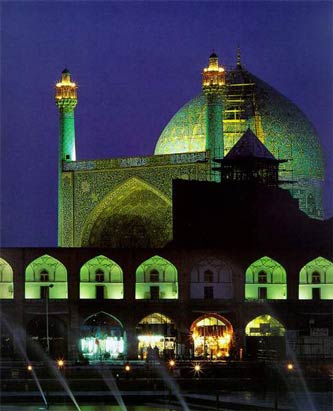
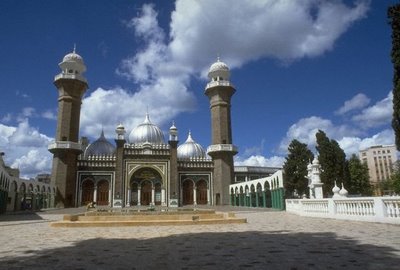
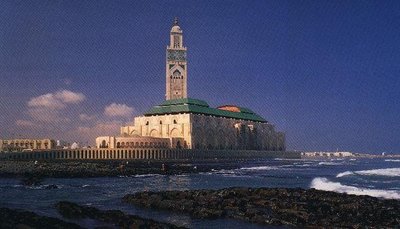
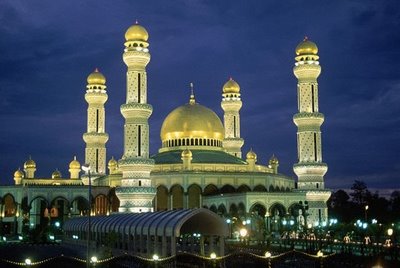
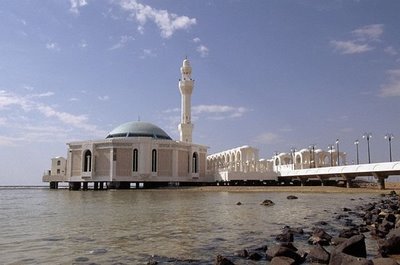
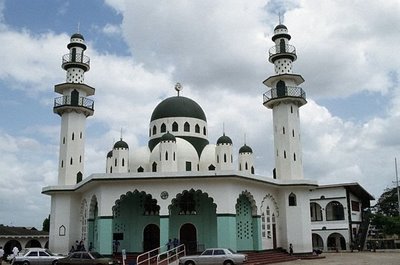
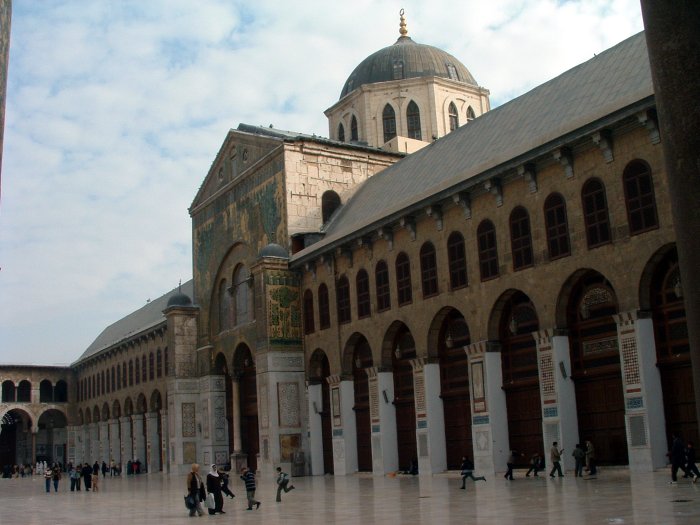
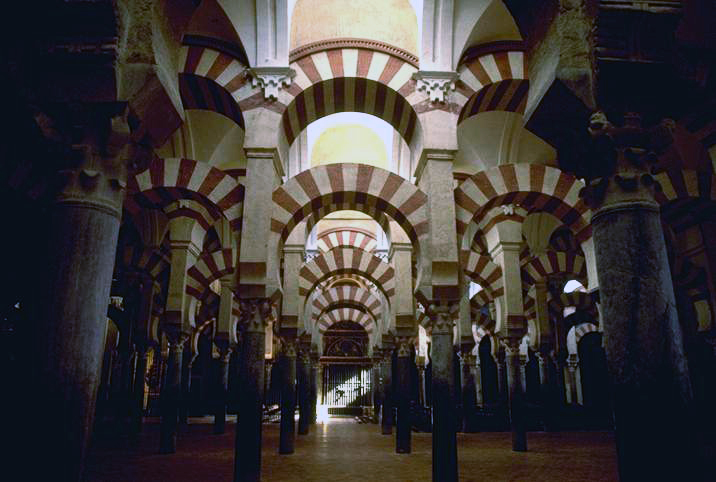
Some of the Most Beautiful Mosques In The World
Some of the Most Beautiful Mosques In The World
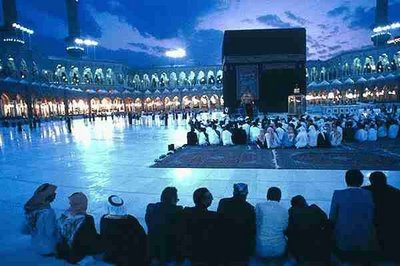
Masjid Al Haram , Mecca , Saudi Arabia
A mosque is a place of worship for followers of Islam. Muslims often refer to the mosque by its Arabic name, masjid. The primary purpose of the mosque is to serve as a place where Muslims can come together for prayer. Nevertheless, mosques are known around the world nowadays for their general importance to the Muslim community as well as their demonstration of Islamic architecture.
Which one of these mosques you've ever visited?