Friday, September 14, 2012

Arab leaders slam anti-Islam film, denounce violent protests

Arab leaders slam anti-Islam film, denounce violent protests


A Libyan man holds a placard during a demonstration against the attack on the US consulate that killed four Americans, including the ambassador, in Benghazi, Libya. (AP)

ARAB NEWS

BRUSSELS/ALGIERS: Egypt, Algeria and Morocco on Thursday slammed an anti-Islam film that has sparked protests worldwide, but also denounced attacks on US missions by angry protesters.
Egypt’s Islamist President Muhammad Mursi vowed Thursday not to allow attacks on foreign embassies in Cairo, saying the Egyptian people reject such “unlawful acts.”
Speaking during a visit to the European Union in Brussels, Mursi said he had spoken to President Barack Obama and condemned “in the clearest terms” the Tuesday attacks on the US consulate in the Libyan city of Benghazi in which the ambassador and three other Americans died.
Crowds protesting at the US Embassy in Cairo the same day climbed its walls and tore down an American flag, which they replaced briefly with a black, Islamist flag.

On Thursday, angry protesters stormed the US Embassy compound in Yemen’s capital, Sanaa, tearing down and burning the US flag, in a scene reminiscent of the Cairo incident.
Officials were investigating whether the Libya rampage was a backlash to an anti-Islamic video with ties to Coptic Christians or a plot to coincide with the anniversary of the Sept. 11 terrorist attacks.
Mursi, who was making his first visit to the West, also harshly criticized the film.
“We condemn strongly ... all those who launch such provocations and who stand behind that hatred,” Mursi said, adding that he had asked Obama “to put an end to such behavior.”
While criticizing the film, Algeria and Morocco also offered their condolences over the death of the US ambassador to Libya.
Morocco described as “shameful aggression” the attack on the US consulate in the Libyan city of Benghazi, and presented its “sincere condolences” to the US government and people.

The Moroccan government stressed that the attack “cannot, in any case, be justified,” in a statement carried by the official MAP news agency.
Algeria’s foreign ministry, meanwhile, condemned the low-budget movie, “Innocence of Muslims,” reportedly made by an Israeli-American, which portrays Muslims as immoral and gratuitously.
Algerian Foreign Minister Mourad Medelci offered his condolences to his US counterpart Hilary Clinton, after the deadly attack.
Ministry spokesman Amar Belani meanwhile deplored “the irresponsibility of the authors of the film... which offends Islam and his prophet,” cited by the official APS news agency.

“The outrages on the sacred religious symbols... can only result in disapproval and indignation, because these provocations are designed to fuel hatred,” he added.
The US embassy in Algiers issued an emergency travel warning, urging US citizens to avoid large crowds, and to “be aware of the potential for protests or demonstrations at any time.”

In Morocco’s largest city Casablanca, between 300 and 400 Muslim activists gathered outside the US consulate, amid a heavy police presence, some shouting anti-US slogans, including “Death to Obama!“
On Thursday, Egyptian police used tear gas as they clashed with a stone-throwing crowd protesting outside the US embassy in Cairo, after 13 people were injured in overnight unrest, according to the health ministry.

— From reports of news agencies
http://MuslimWindow.blogspot.com/

Protests erupt worldwide over anti-Islam film

Protests erupt worldwide over anti-Islam film
Arab News


Protesters break windows at the US embassy in Sanaa on Thursday. (AFP)


Thursday 13 September 2012


SANAA: Protests by Muslims angry at an anti-Islam film erupted across the Middle East and South Asia on Thursday, with hundreds of activists storming the US Embassy compound in Yemen’s capital and burning the American flag.

The protesters breached the usually tight security around the embassy and reached the compound grounds but did not enter the main building housing the offices. Once inside the compound, they brought down the US flag, burned it and replaced it with a black banner bearing Islam’s declaration of faith — “There is no God but Allah.

Protests were also held in Bangladesh, Morocco, Iran and Iraq, while Egyptians clashed with police outside the US Embassy in Cairo, Egypt.
The protests followed the violent attack on the US Consulate in Libya's city of Benghazi, which protesters set on fire before killing the US Ambassador Chris Stevens and three other Americans.

In Iraq, a militia that carried out some of the most prominent attacks on foreigners during the Iraq war threatened US interests in the country.
“The offense caused to the messenger (Prophet Muhammad) will put all American interests in danger and we will not forgive them for that,” Qais Al-Khazali, leader of the Asaib Al-Haq militia, said.

In Morocco’s largest city Casablanca, between 300 and 400 Muslim activists gathered outside the US consulate, amid a heavy police presence, some shouting anti-US slogans, including “Death to Obama!"
Hundreds of supporters of radical Shiite cleric Moqtada Al-Sadr also held a protest in the city of Najaf to voice their protest.
The demonstrators, circled by security forces, shouted slogans hostile to the United States and Israel, an AFP correspondent reported from the city, 150 kilometers (90 miles) south of Baghdad.
Sadr, in a statement, urged the Iraqi government to summon the US ambassador and to impose a ban on visitors from the United States. He also called for “Christians around the world to condemn such actions as this film.”

Sanaa attack
Before storming the grounds of the US Embassy in Sanaa, demonstrators removed the embassy’s sign on the outer wall, set tires ablaze and pelted the compound with rocks.
It was similar to an attack on the US Embassy in the Egyptian capital of Cairo on Tuesday night.
In Egypt, protesters were clashing with police near the US Embassy in the capital Cairo for the third day in a row.
The violence has raised worries that further protests could break out around the Muslim world as anger spreads over the movie.
Yemeni security forces who rushed to the scene fired in the air and used tear gas to disperse the demonstrators and were eventually able to drive them out of the compound. It was not immediately clear whether anyone was inside the embassy at the time of the attack.
The Yemeni Embassy in Washington condemned the attack and vowed to ensure the safety of foreign diplomats and to step up security measures around their missions in the country.
Yemen is home to Al-Qaeda’s most active branch and the United States is the main foreign supporter of the Yemeni government’s counterterrorism campaign. The government on Tuesday announced that Al-Qaeda’s No. 2 leader in Yemen was killed in an apparent US airstrike, a major blow to the terror network.
The movie, “Innocence of Muslims,” came to attention in Egypt after its trailer was dubbed into Arabic and posted on YouTube. The video-sharing website blocked access to it Wednesday.

Apology
In Bangladesh, about 100 people burned the US flag and chanted slogans in Dhaka to register their protest.
The demonstrators, mostly students at Islamic seminaries, hit the flag with shoes before setting it ablaze in front of the Baitul Mokarram Mosque, Bangladesh’s biggest mosque.
“America should apologize immediately and arrest the people who’ve made the film,” Shah Ahmadullah Ashraf, head of Bangladesh Khalefat Andolon, a small Islamic party that organized the rally, told the crowd.
He said the US embassy in Dhaka could be targeted and called for nationwide protests after Friday prayers.
Bangladesh police said they had boosted security at the embassy to prevent any repeat of violence that left four Americans including the US ambassador dead in Libya on Tuesday.

'Death to America!'
In Tehran, up to 500 protesters chanted “Death to America!” and death to the movie’s director as they marched near the Swiss embassy, which handles US interests in the absence of US-Iran diplomatic ties.
Hundreds of police and security personnel prevented the crowd from approaching the diplomatic compound, which had been evacuated by Swiss diplomats as a precaution.
Iranian news agencies said the demonstration was called by the Student Islamic Society, a hard-line university group loyal to supreme leader Ayatollah Ali Khamenei that has held anti-Western rallies in the past.
US media initially cited someone claiming to be an American-Israeli calling himself Sam Bacile as saying he made the film on a $5 million budget with the help of 100 Jews, but no record of such a person has been found.
US President Barack Obama, in a telephone call to Egyptian President Muhammad Mursi on Wednesday, said he “rejects efforts to denigrate Islam, but underscored that there is never any justification for violence against innocents and acts that endanger American personnel and facilities.”
Iranian parliamentary speaker Ali Larijani responded by saying: “Obama’s comments that he respects the Muslim culture is a big and bold lie. The Americans and the Zionists do not tolerate other religions and cultures.”
Western embassies in Iran maintain a high level of vigilance over any protests.
Canada last week closed its embassy, citing concern over the safety of its diplomats.
In November last year, the British embassy was stormed and ransacked during a state-organized demonstration, prompting London to close that mission and order Iran’s diplomats out of Britain.
In 1979, in the wake of Iran’s Islamic revolution, protesters overran the US embassy in Tehran, taking 52 diplomats and other Americans hostage for 444 days. That incident led to the rupture of Iran-US ties.


http://MuslimWindow.blogspot.com/

Monday, September 10, 2012

Iraq VP Tariq al-Hashemi sentenced to death

Iraq VP Tariq al-Hashemi sentenced to death-bbc
Tariq al-Hashemi is now in Turkey, where he has held meetings with Turkish and Iraqi Kurdish politicians

Struggle for Iraq
Exploiting fragility
Iraq's dilemma
Message of hope
Divisions laid bare

Iraq's fugitive vice-president Tariq al-Hashemi has been sentenced to death in absentia after a court found him guilty of running death squads.

The ruling came as at least 92 people were killed and more than 350 injured in more than 20 attacks across Iraq.

Hashemi was the most senior Sunni Muslim in the predominantly Shia Iraqi government until he was charged last December and went on the run.

The charges against him sparked a political crisis in Iraq.

Hashemi declined to comment on the court ruling after talks with Turkish Foreign Minister Ahmet Davutoglu in Ankara, according to the Associated Press news agency.

The vice-president said only he would soon "tackle this issues in a statement".

Other Sunni politicians have denounced Shia Prime Minister Nouri al-Maliki - who issued the warrant for Mr Hashemi - as a dictator, accusing him of deliberate provocation that risked plunging the country back into sectarian conflict.
One of the attacks was near the French consulate in the southern city of Nasiriya

Correspondents say the fragile coalition government of Sunnis, secularists and Shia has appeared to be in danger of collapse ever since.

Sunni insurgents linked to al-Qaeda have been blamed for much of the recent violence in Iraq.

Sunday saw a fresh wave of killings, including:
at least one car bomb explosion in Baghdad, which killed at least nine people on Sunday evening
earlier, three car bombs in the capital's predominantly Shia districts killed 15 people
a shooting and bombing attack on an army base north of Baghdad, which left 11 soldiers dead
two car bomb explosions in the south-eastern city of Amara outside a Shia shrine, killing at least 14 people and wounding more than 60
a bomb blast in the northern city of Kirkuk, which killed seven police officers
a dawn raid on a military base in Dujail, north of Baghdad, in which 10 soldiers died
a bomb explosion outside the French honorary consulate in Nasiriya, in the south, which left one person dead. The French government condemned the blast
attacks were also reported in Tuz Khurmatu, Baquba, Basra and Samarra.Sectarian tensions
Continue reading the main story
Tariq al-Hashemi

Senior member of the secular, mainly Sunni Iraqiyya bloc
Iraqi vice-president since 2006
On 20 December 2011, arrest warrant issued for him on charges of running death squads; he flees to northern Iraq
In April 2012, he leaves Iraq, going to Qatar and Saudi Arabia before arriving in Turkey
In September 2012, convicted and sentenced to death in absentia; 30 days to appeal

The Iraqi government issued the warrant for Hashemi's arrest on 19 December 2011, the day after the last US troops left the country.

He fled first to the largely autonomous Kurdish north of the country, and from there to Qatar and on to Turkey.

Prosecutors said Hashemi was involved in 150 killings. During his trial in absentia in Baghdad, some of his former bodyguards said Mr Hashemi had ordered murders.

He says the charges against him are politically motivated and has accused Mr Maliki of fuelling sectarianism.

On Sunday, an Iraqi court found Hashemi and his son-in-law guilty of two murders and sentenced him to death by hanging. The judge dismissed a third charge for lack of evidence.

Although violence has decreased since its peak in 2006 and 2007, attacks have escalated again after the withdrawal of US troops from Iraq at the end of last year, amid increasing political and sectarian tensions.

The Iraqi government has been hampered by divisions between Sunni, Shia and Kurdish political groups.

The Iraqi government said July 2012 was the deadliest month in nearly two years, with 325 people killed.

Former Iraqi leader Saddam Hussein was a Sunni, and many Sunnis believe they are being penalised by Shias, who have grown in influence since the US invasion.

Sunnis have accused Mr Maliki of taking an authoritarian approach to government.


http://MuslimWindow.blogspot.com/

Sunday, September 9, 2012

RESPECTING THE QUR’AN AL-KARIM

RESPECTING THE QUR’AN AL-KARIM

In Al-Halabi as-saghir, a few lines above the section on sajdat at-tilawa, it is written,“It is a sin to write the Qur’an al-karim in an illegibly small script or to get or own such small-sized copies of Qur’an al-karim. ” Allahu ta’ala sent the Qur’an al-karim to be recited, read, listened to and its contents to be learnt and obeyed. It is an insult to the Qur’an al-karim to write it in an illegibly small script. The Khalifa ’Umar (radiyallahu ’anh) punished a man who wrote an illegibly small copy of the Qur’an al-karim. Buying such Mus’hafs, carrying them in small golden boxes attached to a string around the neck, as Christians do with their icons or crosses, is useless and very sinful.

It is written in Al-Halabi that it is tahrimi makruh [1] to write ayats [2] or names of Allahu ta’ala’ [and also a picture of the Ka’ba] on things spread on the ground or on praying mats (sajjada). It is written in Tahtawi’s annotation to Imdad that it is makruh to write such sacred words on coins or paper bills. The exalted ’alim as-Sayyid ’Abd al Hakim Arwasi (quddisa sirruh) states in one of his letters that during the time of the Sahabat al-kiram [3] and the Tabi’in ’izam [4] (’alaihim ar-ridwan) no sacred word was written on money. The rationale for this is that money is used in buying and selling, and, therefore, it is not revered. It is permissible to print pictures on it. The non-Sunnite governments, for example, that Fatimis and the Rasulis, who belonged to the Mu’tazila and who bore the name Muslim but who in reality did not follow the Shari’at [5], had ayats and hadiths [6]printed on money. This was one of the tricks they played to deceive the people and hide in a Muslim guise. The ’ulama’ [7] of the Din [that is, the Fuqaha-yi ’izam] did not permit writing blessed words even on grave-stones, let alone money. It is written in Al-fatawa al-Hindiyya that it is makruh to touch such money without an ablution.

GLOSSARY
[1] makruh-tahrima: The omission of a wâjib (obligatory performance), and it is close to harâm (prohibited). It is a venial sin to do an act which has been declared to be makrûh tahrîmî.
[2] ayat: A verse of al-Qur’an al-karim; al-ayat al-karima.
[3] Sahaba: if a Muslim has seen the Prophet, or talked to him, at least once when the Prophet was alive, he is called Sahabi. Plural form of Sahabi is Sahaba or As’hab. The word Sahaba-i kiram includes all those great people each of whom has seen the Prophet at least once. The lowest of the Sahaba is much higher than the highest of other Muslims. If a person has not seen the Prophet but has seen or talked to one of the Sahaba at least once, he is called Tabi’. Its plural form is Tabi’in. In other words, the Tabi’in are the successors of the Sahaba. If a person has not seen any of the Sahaba but has seen at least one of the Tabi’in, he is called Taba’i Tabi’in. The Sahaba, the Tabi’in and the Taba’i tabi’in altogether are called the Salaf-i salihin (the early savants).
[4] Tabi’un (al-i’zam): most of those Muslims who had not seen the Prophet (‘alaihi ‘s-salam) but saw (one of) as-Sahabat al-kiram; so their successors. Successors of as-Sahabat al-kiram.
[5] Shari’at: (pl. of Shari’a) i) rules and commandments as a whole of the religion. ii) religion.
[6] hadith (sharif): i) a saying of the Prophet (‘alaihi ‘s-salam).; al-Hadith ash-sharif: all the hadiths as a whole;ii) ‘ilm al-hadith; iii) Books of the hadith ash-sharif. iv)Al-hadith al-qudsi, as-sahih, al-hasan: kinds of hadiths (for which, see Endless Bliss, II).
[7] ‘ulama’: pl. of ‘alim; ‘ulama’ ar-rasihin, those learned in both zahiri and batini sciences.

http://MuslimWindow.blogspot.com/

Saudi Arabia: Women to be fingerprinted

Saudi Arabia: Women to be fingerprinted


Saudi women employees of a hospital in Riyadh are seen at work in this file photo.

ARAB NEWS

Sunday 9 September 2012


JEDDAH: The National Information Center will collect fingerprint data of all women in Saudi Arabia, its director general Prince Bandar bin Abdullah Al-Mshari, announced yesterday.
He said the fingerprint data would enable courts and government departments to verify the identity of women easily.

“Once we obtain the fingerprints of women, verification of their identities will be easier for all bodies (government departments, courts and notaries) who would be equipped with scanners that can read them,” the prince told Al-Hayat daily. He said the center would cooperate with any government department that needs to benefit from the system.

He said the center is planning to carry out several projects including a face verification system, a central archiving system, a comprehensive cases system and a project for the integration of data between the center and government departments.

Other projects include expanding the use of e-gates at airports, developing the fingerprint backup system, the implementation of the ERP Resource Management system at the Ministry of Interior and implementation of electronic passports.

http://MuslimWindow.blogspot.com/

Palestinians seek to amend economic accord with Israel

Palestinians seek to amend economic accord with Israel

Related News

Policy paralysis scuppers Palestinian economic dream
Wed, Sep 5 2012
Security chief slain in restive Palestinian city
Wed, Sep 5 2012
Iran's policies attacked by U.N. head, Egyptian leader
Thu, Aug 30 2012
Israel court tells settlers to evacuate outpost by Tuesday
Wed, Aug 29 2012
Court clears Israeli army over death of U.S. activist
Tue, Aug 28 2012

By Ali Sawafta

RAMALLAH, West Bank | Sun Sep 9, 2012 12:03pm EDT

(Reuters) - The cash-strapped Palestinian Authority said on Sunday it has asked Israel to consider overhauling a key economic agreement that has determined its customs and tax rates for the past 18 years, in the wake of street protests against high prices.

U.N. agencies and Palestinian economists say the economic sections of the Oslo interim peace deals, outlined in the Paris Protocol of 1994, have been implemented by Israel selectively and mostly to its benefit.

"Eighteen years of the Paris economic agreement have become a heavy burden on the Palestinian people and led to very difficult financial and economic conditions," Palestinian Civil Affairs Minister Hussein al-Sheikh told Reuters.

The aid-dependent Palestinian Authority (PA), which exercises limited self-rule in the occupied West Bank, has also been plunged into its deepening financial crisis by a drop in assistance from Western and wealthy Gulf backers.

The Paris Protocol maps out an economic blueprint for a customs union between Israel and the Palestinian territories and pegs value added tax to Israeli rates, now at 17 percent, effectively blocking any steep price cuts in the West Bank.

In another blow to the Palestinian economy, provisions allowing the Palestinians to make free trade agreements with other states and mandating access to Israeli markets have not transpired.

Last week, days of street protests in the occupied West Bank against high living costs led Palestinian Prime Minister Salam Fayyad to say on Thursday he would be willing to resign if there was "a real public demand" that he step down.

Sheikh said he had sent a letter, at President Mahmoud Abbas's request, to Israel's Defence Ministry "demanding they open" the Paris accord and offering to form joint technical committees to negotiate its amendment.

Asked about the Palestinian move, Amos Gilboa, a senior Israeli Defence Ministry official, told Israel Radio: "We have to examine exactly what they are proposing and to see if it's practical."

The Palestinian government is grappling with a recurring budget deficit and external debt, both hovering above a billion dollars or nearly a fifth of gross domestic product.

Foreign aid is now lagging, as a hoped-for $1.1 billion in 2011 reached only $750 million, as pledges from Gulf states in particular fell short.

Some economists say economic growth could be as low as 3-4 percent this year, and with a fifth of the population unemployed, prospects for many of the West Bank's 2.5 million Palestinians are declining.

SALARY CRUNCH

The Palestinian Authority's cash crisis has delayed salary payments for some 153,000 civil servants several times this year.

Perhaps worried the stalling economy will unleash unrest in the territories, Israel is showing flexibility.

After a year of negotiation, Israel agreed this summer to streamline the handling of import duties it collects on goods bound for the Palestinian market - duties worth some $100 million a month, around two-thirds of PA income.

But Samir Abdullah, director general of the Palestine Economic Policy Research Institute, said the Paris accord need to be renegotiated to free Palestinians from their dependence on Israeli oversight and allow them more leeway to trade abroad.

"Israel has not committed to open its market to the Palestinians while the Palestinian market has remained open to it," he told Reuters.

Mechanisms for economic dialogue between Israel and the Palestinians were mandated by the interim Paris deal, which like the Oslo accords, was meant to last for only five years pending a final peace agreement between Israel and the Palestinians.

A 2000 to 2005 Palestinian uprising led Israel to tighten restrictions on the movement of Palestinian goods and statehood negotiations have been frozen since 2010 in a dispute over Jewish settlement construction.

(Writing by Jeffrey Heller in Jerusalem, Additional reporting by Noah Browning in Ramallah; Editing by Sophie Hares)

http://MuslimWindow.blogspot.com/

Saturday, September 8, 2012

US senators push for arming of Syria rebels


US senators push for arming of Syria rebels


Syrians wave revolutionary Syrian flags and chant slogans supporting the Free Syrian Army, in front of the Syrian embassy in Amman, Jordan, on Friday. (AP)

ARAB NEWS

Saturday 8 September 2012


UNITED NATIONS: As the United Nations on Friday nearly doubled its humanitarian appeal for Syria, United States senators urged Washington to provide weapons to Syria's rebel forces to put an end to the Assad regime's genocidal attacks.

“There is a slaughter going on. Everything that motivated all of us to get involved in Libya is happening in Syria, and more," said Sen. Joe Lieberman, who, along with John McCain and Lindsay Graham, pushed for a tougher US stance on the Syrian issue.

The three were in Italy to address the Ambrosetti Forum, a gathering of political and business leaders on the shores of Lake Como.

They urged Washington to help arm Syria’s rebels with weapons and create a safe zone inside the country for a transition government.

Lieberman noted that “Assad is the number one ally in the Arab world of Iran, and Iran is that greatest threat to stability in the region and beyond the region at this point.”

McCain blasted President Barack Obama, who defeated him in the 2008 presidential election, for recently setting the “red line” for Syria at use of chemical weapons.

“If you’re Bashar Assad ... maybe you interpret that to mean that you can do anything short of chemical weapons before the United States will intervene,” he said.

Lieberman and McCain — who together with Graham have toured the volatile Middle East in recent days — both argued that the longer the West waits the more jihadists will gain influence in the rebellion.

“We should be supplying weapons to the opposition to Assad (and) I strongly support the creation of a safe zone,” said Lieberman, the 2000 Democratic vice presidential nominee, who has since become a Connecticut independent.

“The opposition has effectively seized control of a piece of land in northern Syria,” he said. “If we help them protect themselves from Assad’s helicopters and fixed-wing aircraft they can establish a transitional government ... I am confident that if we set it up and told (the regime) that if they attacked it there would be a vigorous response, they would not attack it.”

He said such a zone would enable potential future leaders now located in places like Istanbul and Paris to establish a presence among the people.

With the civil war intensifying, the number of people in need of assistance has doubled since July to 2.5 million, and the UN said it is seeking $347 million for people in need, including more than half a million children forced to flee their homes.
The plea comes even as the original appeal for $180 million is only half-funded. UN Secretary-General Ban Ki-moon has urged donors to increase their contributions.
“At the moment, the entire civilian population inside Syria is gripped by fear and despair,” John Ging, a senior UN humanitarian official, said after the UN humanitarian plan was launched Friday. “Humanitarian action is not a solution in conflict. The solution in conflict is political resolution ... but while there is failure to find that process ... we in the humanitarian community have to step up and do more in ever more dangerous circumstances to help people who are suffering more.”
Activists say more than 23,000 people have been killed in Syria since the uprising against the regime of President Bashar Assad began in March 2011.

EU support

The European Union announced Friday it will provide an additional €60 million ($76 million) in humanitarian aid for Syria.

The announcement came days after France decided to provide direct aid and money to five rebel-held Syrian cities as it intensifies efforts to weaken Assad. It was the first such move by a western power amid mounting calls for the international community to do more to prevent bloodshed.

UN spokesman Martin Nesirky said that more than 1.2 million people are displaced inside Syria, half of them children. Another nearly 250,000 Syrian refugees are in neighboring Jordan, Turkey, Lebanon and Iraq, including more than 100,000 people who were registered as refugees in August alone, Nesirky said.
Peter Maurer, the new president of the Geneva-based International Committee of the Red Cross, said Friday he held “positive” talks with Assad this week on key humanitarian and human rights issues — freeing up the delivery of badly needed aid and gaining access to detainees.
He said Assad and other ministers generally agreed on the need to reduce barriers to delivering aid, and the president “expressed his readiness” to address the issue of prison detainees.
The UN plan was launched at the Syria Humanitarian Forum in Geneva, which brought together more than 350 participants from governments, regional and international organizations and UN humanitarian agencies to mobilize resources to help those uprooted by the conflict.
The updated UN humanitarian plan focuses on health, food, livelihoods, infrastructure repairs, community services, education and shelter in conflict areas including Homs, Hama, Idlib, Damascus, Deir el-Zour and Aleppo, as well as areas hosting large numbers of internally displaced people.
With thousands of Syrians fleeing the fighting, the UN refugee agency said its share of the new $347 million appeal is doubling to $41.7 million.
The agency is seeking funds for household items, medical assistance, rehabilitation of shelters and counseling of displaced populations, spokesman Adrian Edwards said in Geneva. The agency is also seeking help to provide financial assistance for 200,000 people considered vulnerable and to encourage displaced Syrian children to return to school, he said.
The EU said its new pledge brings the total aid donated by the 27-nation bloc to more than €200 million ($253 million) since the conflict began in March 2011.
The new EU funds will go to agencies that provide shelter and medical aid and for other humanitarian efforts, Kristalina Georgieva, EU commissioner for humanitarian aid, said at a foreign ministers meeting in Cyprus.
At the meeting, British Foreign Minister William Hague stressed that EU countries can only provide non-lethal aid to Syrian opposition groups because of an EU arms embargo that renders the supply of any weapons illegal.
French officials have acknowledged providing communications and other non-lethal equipment to Syrian rebel forces, but say they won’t provide weapons without international agreement.
“At the moment we have a European Union arms embargo on Syria; it’s not possible or legal for any EU nation to send weapons to anybody in Syria, and therefore our chosen route, and is the same route of France and the United States, is to give non-lethal assistance, and we’re doing that,” Hague told reporters.

— With reports of agencies
http://MuslimWindow.blogspot.com/

Friday, September 7, 2012

Saudi oil well dries up


Saudi oil well dries up


By Ambrose Evans-Pritchard Energy


If Citigroup is right, Saudi Arabia will cease to be an oil exporter by 2030, far sooner than previously thought.

A 150-page report by Heidy Rehman on the Saudi petrochemical industry should be sober reading for those who think that shale oil and gas have solved our global energy crunch.

I don't wish to knock shale. It is a Godsend and should be encouraged with utmost vigour and dispatch in Britain. But it is for now plugging holes in global supply rather than covering the future shortfall as the industrial revolutions of Asia mature.

The basic point – common to other Gulf oil producers – is that Saudi local consumption is rocketing. Residential use makes up 50pc of demand, and over two thirds of that is air-conditioning.

The Saudis also consume 250 litres per head per day of water – the world's third highest (which blows the mind), growing at 9pc a year – and most of this is provided from energy-guzzling desalination plants.

All this is made far worse across the Gulf by fuel subsidies to placate restive populations.

The Saudis already consume a quarter of their 11.1m barrels a day of crude output. They are using more per capita than the US even though their industrial base as a share of GDP is much smaller.

The country already consumes all its gas. (Neighbouring Kuwait is now importing LNG gas from Russia:


From Heidy Rehman at Citi:


• Saudi Arabia Could be an Oil Importer by ~2030 — Saudi Arabia is the world’s largest oil producer (11.1mbpd) & exporter (7.7mbpd). It also consumes 25% of its production. Energy consumption per capita exceeds that of most industrial nations. Oil & its derivatives account for ~50% of Saudi’s electricity production, used mostly (>50%) for residential use. Peak power demand is growing by ~8%/yr. Our analysis shows that if nothing changes Saudi may have no available oil for export by 2030.

• It Already Consumes All Its Gas Production — Saudi Arabia produces 9.6bn ft3/day of natural gas. This is entirely consumed domestically. It is looking to raise gas production to 15.5bn ft3/day by 2015E, implying a 2011-15E CAGR of 12.7%. However, peak power demand is growing at almost 8% pa. We believe Saudi Arabia will need to find new sources to meet residential & industrial demand.

This may concentrate a few minds in The Kingdom. The country is already planning an 80GW nuclear blitz though they are woefully short of nuclear power experts.

It has big hopes from solar projects based on successes of solar farms in California. Both nuclear and solar would allow it export more of its oil output.

A great deal could change. New desalination filters should reduce energy use drastically, for instance. Saudi fuel subsidy policies may change.

While I don't wish to judge the claims of this report – I merely pass it on to readers since I don't know enough about the Saudi system – but it is yet another piece of evidence pointing to Peak Cheap Oil.

Jeremy Leggett, the head of the UK Taskforce on Peak Oil and Energy Security, says Britain is sleepwalking into a potential disaster by failing to prepare fully for a global supply crunch.

The refusal to listen to warning signals is comparable to the complacency in the build-up to the financial crisis, he argues, but with graver implications for the British economy.

I agree.http://blogs.telegraph.co.uk/finance/ambroseevans-pritchard/100019812/saudi-oil-well-dries-up/
http://MuslimWindow.blogspot.com/

The Quran Chapter 54 The Moon [English]


http://MuslimWindow.blogspot.com/

50 Chinese convert to Islam in Saudi Arabia - July 2011


http://islaamdoon.blogspot.com/

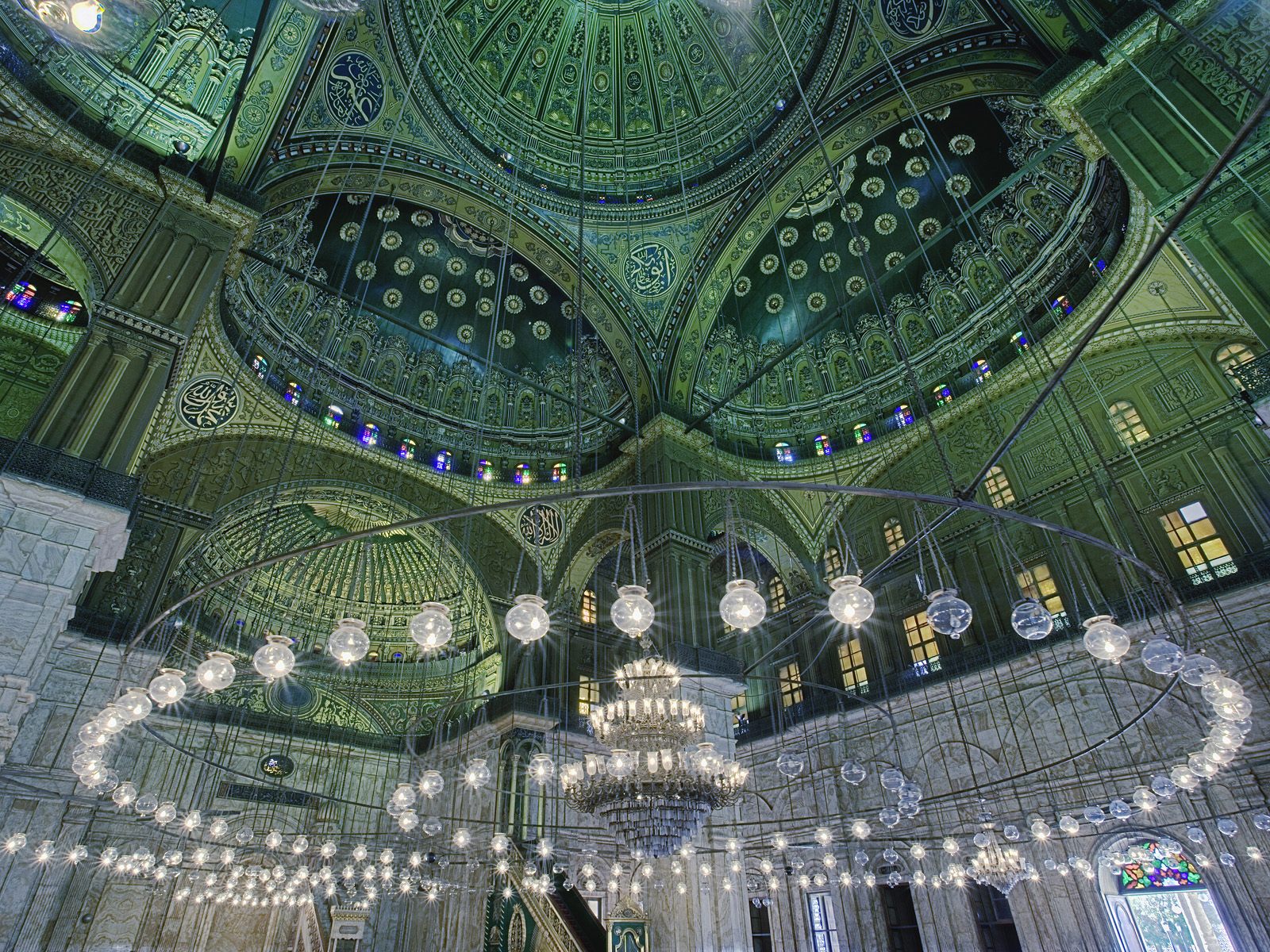
Great Mosques of Egypt


Great Mosques of Egypt 


Mosques are a place where the Muslims go five times in a day to proper prayers, Muslims said that mosques are the house of Allah according to their Holy Prophet Mohammad (Peace Be Upon Him), very where around the world you can found a lot of mosques, but in this post, I have gathered up a collection of Gorgeous Mosques Of Egypt, because Egypt mosques are historical mosques, mostly in Cairo, Egypt mosques are very notable, as well as the gorgeous mosques, Egypt mosques are very well-know due to their structures and tomb. So, check out the gorgeous mosques of Egypt.
Gorgeous Mosques Of Egypt Proper For Prayers

http://www.seizedesign.com/photography/gorgeous-mosques-of-egypt-proper-for-prayers/

http://MuslimWindow.blogspot.com/